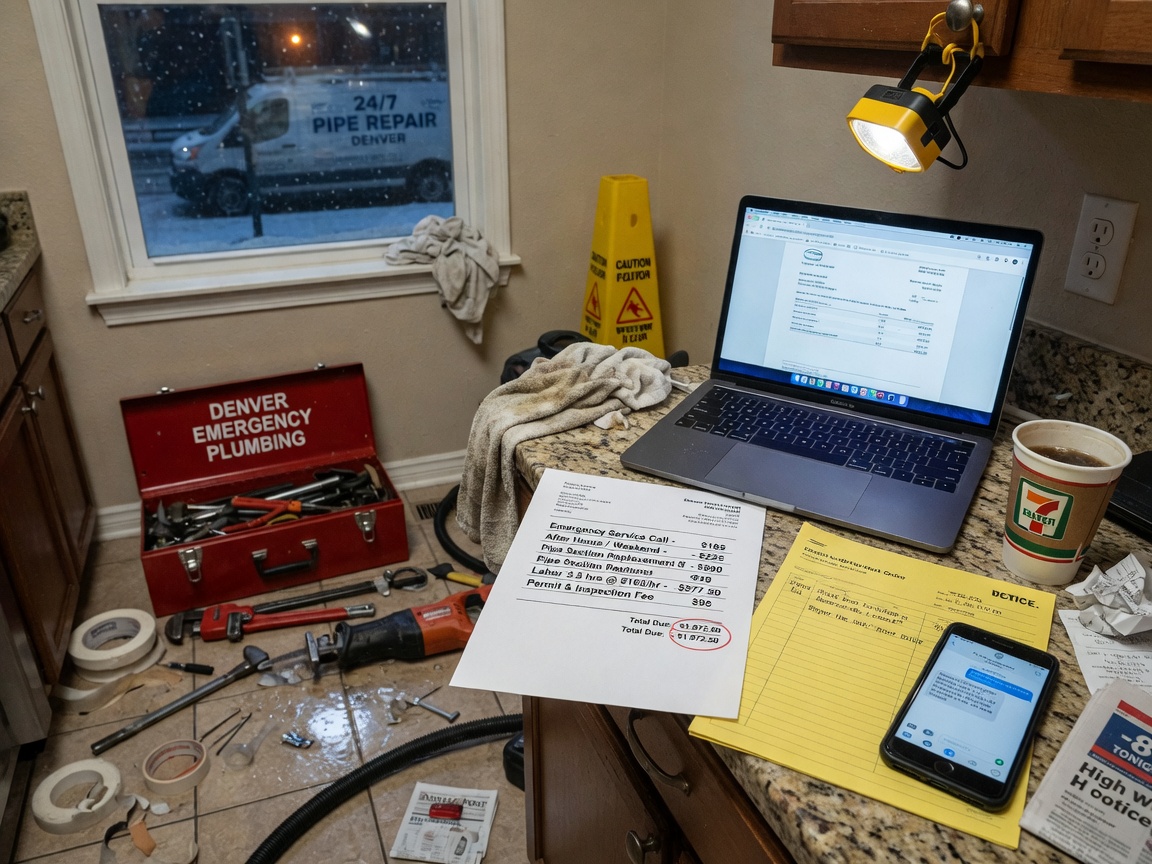
Lafayette sits just north of Denver along US 287 with a mix of 1920s brick bungalows in Old Town and post-1990 subdivisions near Waneka Lake. Winters drop below freezing most nights, so supply lines in crawl spaces and garages freeze fast when insulation is thin. Afternoon thunderstorms dump heavy rain that overwhelms older clay sewer laterals on blocks like East Simpson and Cleveland. When a main bursts at 2 a.m. or a water heater leaks on a Saturday, the crew leaves the shop at 2450 S University Blvd and heads straight up the turnpike to reach Lafayette addresses before secondary damage spreads.
Many homes here sit on narrow lots with detached garages and alley access only. That layout forces techs to park on side streets and run hoses across sidewalks, especially around the historic district where parking is tight near the Lafayette Public Library and Coal Creek Trail. Newer builds east of 120th still use CPVC that cracks under repeated freeze-thaw cycles, while the older stock has galvanized steel that restricts flow and hides pinhole leaks behind walls. Knowing which streets have the original 1950s lines versus recent repipes lets the team bring the right fittings and camera heads on the first trip.
Around Lafayette
We regularly work near:
- 📍Waneka Lake Park
- 📍Old Town Lafayette
- 📍Lafayette Public Library
- 📍Coal Creek Trail
- 📍Lafayette Elementary School
Emergency Plumber in Lafayette — Local Notes
- •Old Town bungalows on narrow lots often require alley or side-yard access only, so longer drain machines and extra hose lengths are staged before arrival.
- •Homes near Waneka Lake sit on clay-heavy soil that shifts with spring moisture, stressing sewer laterals more than neighborhoods farther east.
- •Frequent cold snaps combined with semi-arid low humidity mean attic and crawl-space pipes freeze even when daytime highs reach the 40s.
- •Thunderstorm runoff funnels quickly into low-lying blocks around Coal Creek, pushing debris into cleanouts and creating sudden backups after heavy rain.