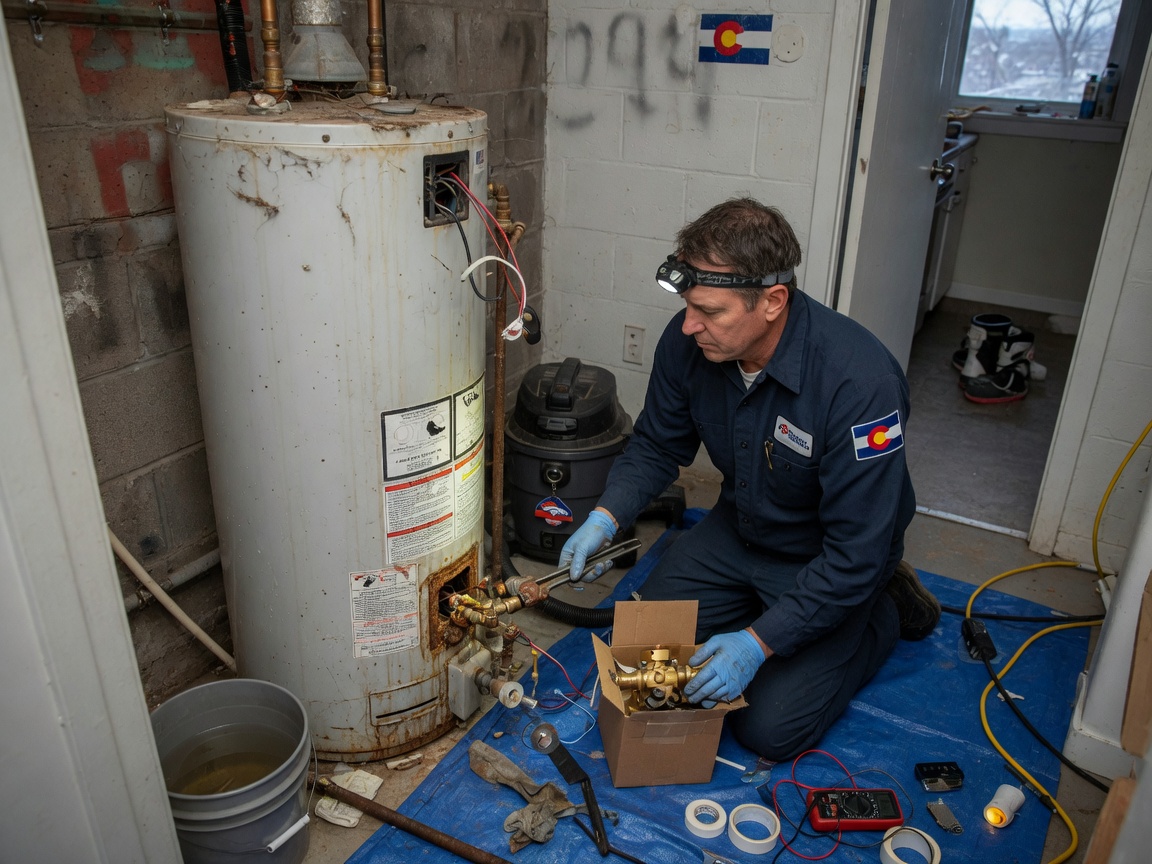
Denver's older housing stock in neighborhoods like Capitol Hill, Five Points and Baker often features tanks installed decades ago that struggle with our cold winters and semi-arid climate swings. Frequent afternoon thunderstorms can spike humidity and pressure fluctuations, leading to leaks at connections or accelerated corrosion on older units. Technicians see many calls where sediment from the South Platte watershed builds up faster than in newer Stapleton or Montclair homes, shortening element life and triggering thermostat failures.
Gas models common in Washington Park and Park Hill require careful valve and pilot assembly work because winter temperature drops increase demand and stress components. Electric units in LoDo and RiNo condos frequently need element replacements after power surges during summer storms. Working around Denver County code means verifying proper venting and expansion tanks on every job to avoid callbacks when city inspectors review renovations.
Nearby cities like Aurora, Lakewood and Centennial share similar water chemistry that leaves scale on heating surfaces, but Denver's denser older stock means more confined basement access and shared walls that complicate tank swaps. Homeowners often overlook anode rod checks until a pinhole leak appears, especially after the ground freezes and pipes contract. Proper flushing during service prevents the noisy rumbling that signals heavy buildup in high-use households.
Technician insight
In Denver, the thing that catches most people out with Water Heater Repair is how quickly sediment from our water source builds in older tanks across Washington Park and Park Hill once winter temperatures drop and usage spikes, turning a simple element swap into a full flush job if ignored.
Sediment-Related Failure in Highland
A Highland homeowner reported lukewarm water and rumbling sounds after the first cold snap. Inspection showed heavy sediment on the lower element of a 12-year-old gas unit. We flushed the tank, replaced the element and valve, then verified operation. Hot water returned consistently without further noise.
Water Heater Repair Services We Offer
✓Electric Element Repairs
Replace failed upper or lower elements in Denver homes where hard water scale shortens lifespan, restoring hot water without full tank replacement.
✓Gas Control Valve Repairs
Diagnose and replace faulty gas valves on units serving Capitol Hill and Highland properties to fix inconsistent temperatures and pilot outages during winter peaks.
✓Thermostat Replacement
Install accurate thermostats on electric and gas heaters in older Park Hill and Baker homes to maintain steady output despite Denver's temperature swings.
✓Anode Rod Inspection and Replacement
Check and swap corroded anode rods in tanks across Denver County to slow rust and extend service life before leaks develop in high-use households.
✓Tank Flushing Services
Remove sediment buildup common in South Platte water supplies for homes in Cherry Creek and Washington Park, reducing noise and improving efficiency.
✓Leak Detection and Sealing
Locate and repair leaks at fittings or valves on units in tight LoDo and RiNo spaces where access is limited and water damage risks are high.
Water Heater Repair Cost in Denver, CO
| Service | Typical Range | What Affects It |
|---|---|---|
| Electric Element Replacement | $200–$450 | Higher in older Capitol Hill homes with limited access |
| Gas Valve Repair or Replacement | $250–$550 | Varies with model age and winter demand |
| Full Tank Flush and Anode Check | $150–$300 | Recommended annually in Denver hard water areas |
| Thermostat Replacement | $175–$350 | Includes testing surrounding components |
Ranges are typical for Denver, CO and confirmed with an exact written quote before any work starts.
How it works
- 1
Initial Assessment
Arrive at the Denver address and inspect the water heater model, age, and visible connections while checking for leaks or temperature issues reported by the homeowner.
- 2
Diagnostic Testing
Test elements, valves, thermostats and anode condition using multimeters and pressure gauges to pinpoint the exact failure without unnecessary part swaps.
- 3
Targeted Repair
Perform the needed replacement or adjustment on-site, flushing sediment when required and confirming proper operation before leaving the property.
- 4
Final Verification
Run the unit through cycles, check for code-compliant venting and connections, then explain maintenance steps specific to Denver's water and climate conditions.
Pricing
Upfront quotes provided after inspection; ranges reflect typical Denver County jobs.