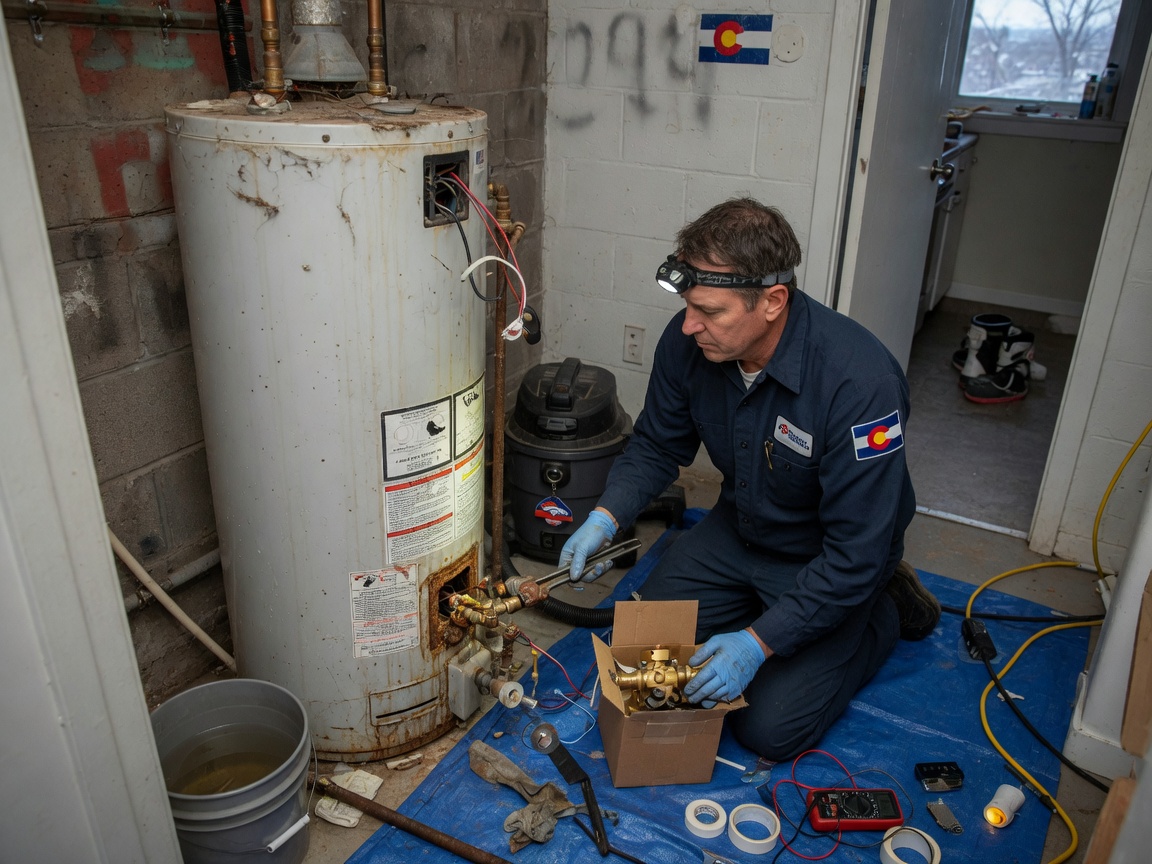
Louisville sits just northwest of Denver with a mix of historic homes along Main Street and newer builds near the old coal mines. Winters here drop hard enough to freeze lines in crawl spaces and basements that lack proper insulation, especially on the older blocks east of Centennial Park. When a pipe bursts at 2 a.m. on a weeknight, the crew from 2450 S University Blvd heads straight up US 36 and can reach most Louisville addresses before the water reaches finished floors.
Summer thunderstorms dump rain fast on the clay-heavy soils around Coal Creek, and that water finds every crack in aging cast-iron laterals. Homeowners in the blocks between Pine and Spruce often see backups after heavy afternoon storms because the original 1950s lines were never sized for today’s density. The same crew that handles the winter freezes switches to camera inspections and hydro-jetting when those calls spike in July.
Around Louisville
We regularly work near:
- 📍Main Street
- 📍Centennial Park
- 📍Louisville Recreation Center
- 📍Monarch High School
- 📍Coal Creek
Emergency Plumber in Louisville — Local Notes
- •Historic district homes west of Main Street commonly have galvanized or cast-iron supply lines from the 1920s-1940s that split during the first hard freeze.
- •Narrow alleys behind Pine and Spruce streets limit access for larger service trucks, so the response team keeps a compact van stocked for Louisville runs.
- •Cold air drains down the Coal Creek corridor at night, making basements on the east side of town the first to see frozen supply lines even when temperatures are only in the teens.
- •Clay soils around the old mine sites hold water and shift with freeze-thaw cycles, stressing sewer laterals more than in the sandy areas closer to Denver proper.